

What Is Robotics and How Are Its Applications Used?
Robotics is the field of designing, building, and controlling machines that sense their surroundings and perform physical tasks. These machines may assemble car parts, inspect pipelines, assist surgeons, or move packages across busy warehouses. A robot usually combines mechanical structures, sensors, software, and decision-making systems. Together, these elements allow it to repeat actions with speed and measurable precision.
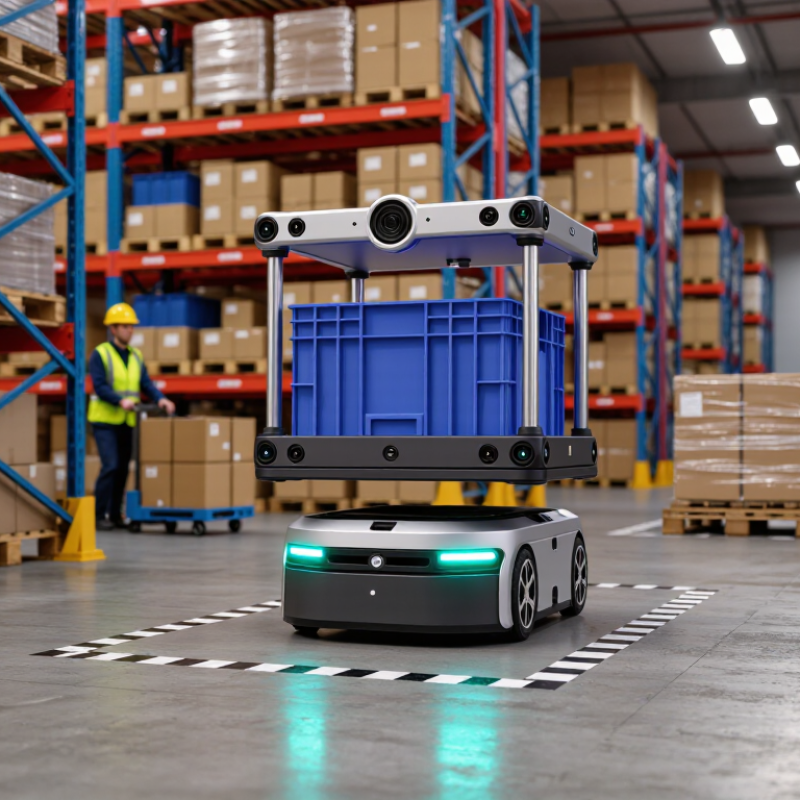
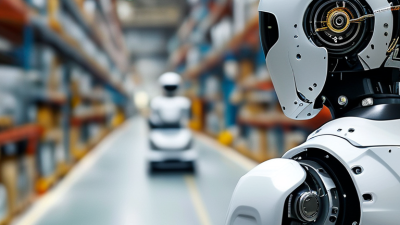
Consider a warehouse robot moving beneath a shelf. Its cameras read floor markers, while sensors detect workers, boxes, and unexpected obstacles. This small scene shows how robotics applications connect engineering with practical human needs. In hospitals, robotic systems can support minimally invasive procedures, but trained clinicians still guide important decisions. In agriculture, autonomous machines may identify dry soil and deliver water more accurately. The technology is useful, not magical.
Safety remains central. Engineers test collision limits, software responses, maintenance procedures, and emergency stops before deployment. International standards and workplace rules also help organizations evaluate risks responsibly. However, performance can change in poor lighting, crowded spaces, or unfamiliar environments. That limitation matters. A confident demonstration does not prove universal reliability.
Understanding robotics therefore requires more than listing impressive machines. It means examining their purpose, operating conditions, costs, data, and effects on workers. Some applications improve consistency and reduce exposure to dangerous tasks. Others introduce training demands, privacy concerns, or expensive maintenance. The field continues to develop, sometimes unevenly. A careful introduction should recognize both its practical achievements and its unresolved questions.
Defining Robotics and Its Core Characteristics
What Is Robotics and How Are Its Applications Used?
Robotics is the field of designing, building, and operating machines that perform physical tasks. These machines may sense their surroundings, process information, and respond through movement. A robot usually combines mechanical parts, sensors, control software, and a power source. Its core characteristics include autonomy, precision, repeatability, and interaction with people or environments. However, not every automated machine is truly autonomous. Some systems follow fixed instructions and need constant human supervision.
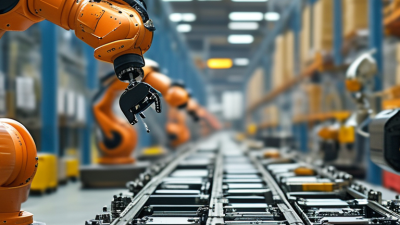
In practical settings, robotics supports manufacturing, medical assistance, agriculture, logistics, and hazardous inspection. A robotic arm can place components with steady accuracy. A mobile machine can inspect a narrow tunnel where human access is risky. Medical robots may help professionals perform delicate movements, but they do not replace clinical judgment. Reliable robotics requires testing, maintenance, clear operating limits, and trained users. Small design weaknesses can create serious failures. This point is often underestimated.
Tips: Define the robot’s task before choosing its hardware. Measure accuracy, speed, safety, and energy use separately. Test unusual conditions, such as poor lighting or uneven floors. Keep a human review process for important decisions. Good robotics is not only about movement. It is about controlled, measurable, and responsible performance. Mistakes can reveal better designs, though they should never be treated casually.
| Robotics Dimension | Definition | Core Components or Data | Typical Applications | Operational Value and Key Considerations |
|---|---|---|---|---|
| Autonomy | The ability of a robotic system to perform tasks with limited direct human control by using programmed rules, sensor feedback, or adaptive algorithms. |
Task planning
Decision logic
Feedback control
Autonomy can range from direct teleoperation to fully independent task execution. |
Warehouse movement, agricultural monitoring, inspection, cleaning, and navigation in structured environments. | Reduces repetitive manual control, but performance depends on reliable sensing, suitable software, and clearly defined operating conditions. |
| Sensing and Perception | The process of collecting and interpreting information about the robot, nearby objects, and the surrounding environment. |
Cameras
Depth sensors
Force sensors
Encoders
Common outputs include position, distance, shape, motion, temperature, and contact force. |
Object sorting, quality inspection, obstacle detection, medical assistance, and environmental measurement. | Improves situational awareness; accuracy may be affected by poor lighting, occlusion, reflective surfaces, dust, or sensor noise. |
| Actuation and Motion | The mechanisms that convert electrical, hydraulic, or pneumatic energy into controlled movement. |
Motors
Gear systems
Hydraulic actuators
Joints
Important measures include position, speed, acceleration, payload, and repeatability. |
Material handling, assembly, painting, lifting, mobility, and operation in difficult or hazardous environments. | Determines movement precision, force, speed, energy consumption, and the load a robot can safely handle. |
| Control Systems | Software and hardware that compare desired motion with sensor feedback and adjust the robot’s actions. |
Motion control
Trajectory planning
Feedback loops
Control may be position-based, velocity-based, force-based, or a combination of these methods. |
Precision assembly, robotic machining, stabilization, autonomous navigation, and coordinated multi-joint movement. | High-quality control improves accuracy and repeatability; delays, incorrect calibration, or unstable feedback can reduce performance. |
| Manipulation | The ability to grasp, move, orient, assemble, or otherwise physically interact with objects. |
End effectors
Grippers
Force feedback
Performance depends on grip force, object geometry, material properties, and contact accuracy. |
Assembly, packaging, laboratory handling, food processing, surgery assistance, and hazardous-material handling. | Enables complex physical work; delicate, flexible, transparent, or irregular objects remain challenging to handle reliably. |
| Mobility and Navigation | The capability to move through an environment while estimating position, avoiding obstacles, and following a route. |
Wheeled platforms
Legged platforms
Aerial platforms
Key data includes location, velocity, map information, clearance, and battery state. |
Inspection, delivery, search and rescue, infrastructure surveys, mining, and indoor transport. | Expands the work area and access to difficult locations; uneven terrain, changing layouts, weather, and limited battery capacity affect operation. |
| Human–Robot Interaction | The methods through which people communicate with, supervise, teach, or physically work alongside robots. | Touch interfaces Voice commands Gesture recognition Teleoperation | Assistive technologies, collaborative workspaces, education, rehabilitation, remote inspection, and service tasks. | Effective interaction requires understandable feedback, predictable behavior, accessible controls, and appropriate separation or contact limits. |
| Safety | The engineering and procedural measures used to prevent injury, equipment damage, and unsafe robot behavior. |
Emergency stops
Protective barriers
Speed limits
Collision detection
Risk assessment considers energy, motion, payload, workspace, and human proximity. |
Manufacturing, healthcare, construction, laboratories, public spaces, and collaborative work areas. | Safety must be designed throughout the system lifecycle, including installation, operation, maintenance, software updates, and decommissioning. |
| Connectivity and Integration | The connection of robots with machines, databases, sensors, production systems, and human operators. |
Industrial networks
Robot operating software
Data logging
Collected data may include cycle time, fault codes, energy use, task status, and maintenance indicators. |
Production coordination, inventory movement, fleet supervision, remote diagnostics, and predictive maintenance. | Supports monitoring and coordinated workflows; cybersecurity, interoperability, data quality, and network availability are essential. |
| Adaptability | The ability to cope with changes in objects, layouts, tasks, operating conditions, or instructions. |
Machine learning
Reconfigurable tools
Vision-based adjustment
Adaptability can be evaluated by setup time, task variation, recovery rate, and required human intervention. |
Small-batch production, crop monitoring, personalized assistance, inspection of varied products, and disaster response. | Reduces reprogramming and setup effort, but adaptive systems require representative data, validation, monitoring, and clear limits. |
| Performance Measurement | The systematic evaluation of how accurately, efficiently, reliably, and safely a robot performs its intended tasks. | Accuracy Repeatability Cycle time Uptime Energy use | Used across manufacturing, logistics, healthcare, agriculture, construction, inspection, and research. | Measurement supports maintenance, process improvement, safety verification, and decisions about whether robotic automation is suitable for a task. |
Related Posts
-
Top Robotics Robot Innovations Shaping the Future of Technology?
-
China Top 10 Robotics Applications for Global Buyers
-
What Are the Most Promising Robotics Applications Today?
-
Top Robotics Applications in China that Global Buyers Want?
-
Discover Han's Robot Solutions for Your Global Sourcing Needs?
-
What Are the Top Types of Robotics and Automation?