China Top 10 Robotics Applications for Global Buyers
China Top 10 Robotics Applications for Global Buyers introduces practical opportunities across factories, warehouses, hospitals, farms, and public facilities. China’s robotics industry now offers robotic arms, autonomous mobile robots, inspection systems, surgical support equipment, and intelligent cleaning machines. These solutions can reduce repetitive labor and improve production consistency. However, technology alone does not guarantee business value.
“Robotics is about giving machines the ability to act in the physical world,” says Professor Daniela Rus, a respected robotics researcher and director of MIT’s Computer Science and Artificial Intelligence Laboratory. Her observation highlights an important buying reality. A robot must perform reliably beside real workers, real materials, and real production schedules. A warehouse robot may need to move through narrow aisles at night. A welding arm must maintain stable accuracy beside sparks and heat. An agricultural robot may face mud, rain, and uneven ground.
This guide examines ten leading robotics applications available from Chinese suppliers. It focuses on operating conditions, integration requirements, safety features, maintenance, and measurable return on investment. Buyers should review certifications, software compatibility, spare-parts access, training, and after-sales support. Factory visits and pilot testing remain valuable.
Some deployments still disappoint.
A low purchase price can hide integration costs. A technically impressive machine may not suit a buyer’s workflow. That is an uncomfortable truth. Therefore, this overview avoids treating automation as a universal solution. It presents useful evidence, practical limitations, and questions that global buyers should ask before selecting robotics applications for long-term operations.
What Defines China’s Top Robotics Applications for Global Buyers
China’s top robotics applications are defined by practical value, not impressive demonstrations alone. Global buyers often assess welding, assembly, palletizing, inspection, logistics, and medical support through measurable factory results. A useful system should reduce cycle time, improve repeatability, and operate safely beside trained workers. Small details matter. For example, a palletizing robot must handle uneven cartons, changing product sizes, and limited floor space.
Strong applications also show mature engineering behind the machine. Buyers examine sensor accuracy, software compatibility, maintenance access, and operator training. They ask whether the system can connect with existing production equipment without expensive redesign. Clear safety documentation and local compliance records build trust across different markets. Reliable suppliers should provide testing data, spare-part planning, and realistic installation schedules. Promises are easy.
However, application quality is not always consistent. Some solutions perform well in controlled demonstrations but struggle with dust, vibration, unstable lighting, or frequent product changes. This is where factory trials become valuable. A buyer can observe gripper performance, error recovery, and downtime under real working conditions. The best applications leave room for human judgment instead of forcing every task into automation.
Cost also needs a wider view. A lower purchase price may hide integration work, training expenses, or long service delays. Global buyers should compare total operating cost over several years. They should also check cybersecurity controls and data-handling practices. China’s leading robotics applications stand out when productivity, safety, adaptability, and dependable support are proven together, not merely advertised.
The Ten Leading Robotics Application Areas in China
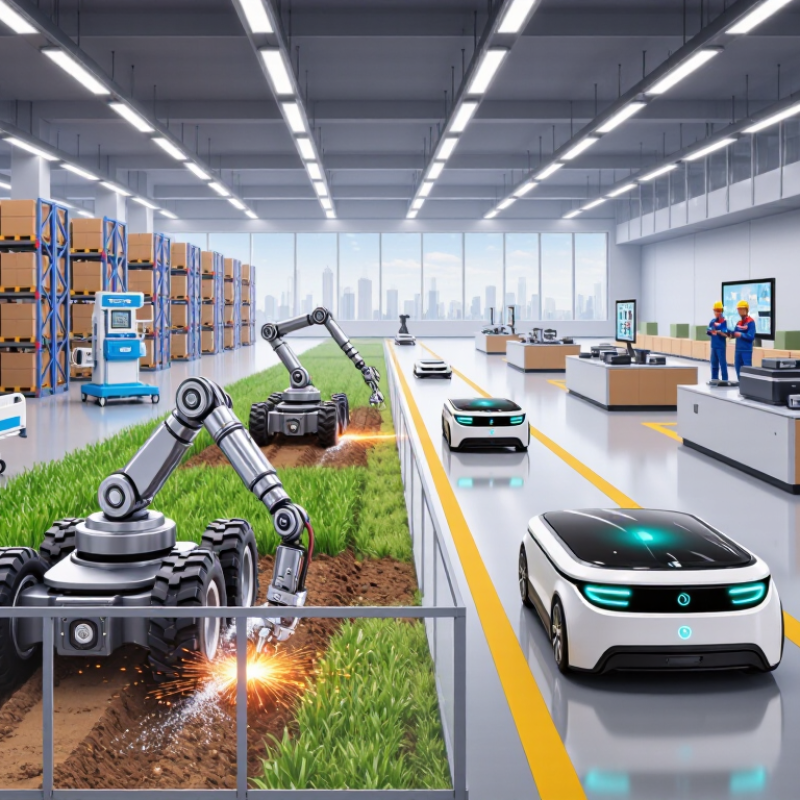
China’s robotics market is shaped by practical production needs, not one single sector. Factory assessments often reveal ten leading application areas. Automotive manufacturing uses robots for welding, painting, assembly, and quality inspection. Electronics factories rely on precise handling, screwdriving, testing, and small-part assembly. Logistics warehouses use mobile robots for sorting, pallet movement, and inventory scanning. Food and beverage plants apply robots to packaging, picking, and hygienic material handling.
Metal fabrication remains a strong area, especially for welding, cutting, polishing, and machine tending. Pharmaceutical facilities use robots in packaging, laboratory handling, and controlled-environment processes. Agriculture is adopting robotic systems for harvesting support, spraying, sorting, and crop monitoring. Construction sites are testing robots for surveying, brick placement, drilling, and hazardous inspection. Some applications still require close human supervision.
Healthcare and elderly care form another important area. Robots assist with rehabilitation exercises, medicine delivery, hospital transport, and patient mobility. Mining and energy operations use robotic platforms for underground inspection, equipment monitoring, and dangerous maintenance tasks. The technology looks impressive. The deployment is harder.
Global buyers should examine payload limits, operating temperature, safety functions, software compatibility, and local service capacity. A pilot project with measurable targets is usually safer than a rapid full-scale purchase. Real factories contain dust, uneven floors, changing products, and workers with different habits. Robots may perform well in demonstrations but struggle under these conditions. Integration planning, operator training, spare parts, and documented testing deserve equal attention. Mistakes are possible, and ignoring them creates expensive surprises.
How Chinese Robots Address Different Industry Requirements
Chinese robotics suppliers now serve ten practical applications: welding, assembly, machine tending, inspection, packaging, palletizing, warehousing, agriculture, healthcare logistics, and construction.
In welding, robotic arms maintain steady torch angles and repeatable bead paths.
Assembly robots handle small components, screws, and adhesive dispensing.
Machine-tending systems load parts into CNC equipment, reducing idle minutes.
Vision-guided inspection checks dimensions, surface defects, and missing components. These systems suit factories with changing product models, although camera calibration still demands careful technical work.
Packaging robots manage bottles, cartons, and irregular parcels at different speeds.
Palletizing units build stable layers and reduce lifting injuries.
In warehouses, mobile robots transport bins across marked routes and connect with inventory software.
Agricultural robots support harvesting, sorting, and greenhouse monitoring.
Healthcare logistics robots move medicines and supplies through controlled indoor environments.
Construction robots assist with layout, drilling, and material handling.
The best solution depends on workflow, floor space, payload, safety rules, and local maintenance skills. A low-cost robot may fail when integration is ignored. That happens more often than expected. Buyers should request cycle-time tests, safety documentation, spare-parts plans, and operator training. Chinese manufacturers often provide configurable hardware and remote engineering support, but communication gaps can slow deployment. A pilot project reveals these weaknesses early. Human supervision remains essential, especially when products, lighting, or working conditions change.
Key Factors for Comparing Robotics Solutions from China
Comparing Chinese robotics solutions starts with application fit, not catalog size. A packaging line may need six-axis arms, vision inspection, and safe changeover. A warehouse project may value navigation accuracy, battery life, and service access. Buyers should record cycle time, payload, reach, floor conditions, and operator skills before requesting quotations. This practical brief prevents impressive specifications from hiding weak performance.
Total cost needs closer examination. Compare robot price, grippers, software licenses, installation, training, spare parts, and downtime. Ask for test data under similar loads, not only laboratory figures. Request a live trial with your product, lighting, conveyor speed, and packaging variation. Check repeatability after warm-up. Small differences matter. Confirm documentation, electrical standards, cybersecurity controls, and local safety obligations with qualified professionals. A capable supplier should explain limits clearly and provide maintenance intervals, fault codes, and response times.
Experience appears in details. Can the integrator show anonymized case evidence from similar industries? Can technicians diagnose a sensor fault without replacing the entire cabinet? Language support and remote assistance also affect uptime. Still, buyer reviews and demonstrations can be incomplete. I would keep a risk register and score suppliers against the same evidence. My own comparison mistake was weighting purchase price too heavily. A cheaper cell may demand custom tooling later. Pilot projects expose these gaps, although pilots add cost and delay. That trade-off deserves honest discussion before a global rollout.