Best Tool Change Robot in 2026 for Industrial Buyers
In 2026, choosing the best tool change robot means looking beyond advertised speed. A reliable system must match the actual tools, production rhythm, and workspace on your factory floor. Buyers should compare payload capacity, repeatability, changeover time, and the robot’s compatibility with tool interfaces and control systems. Small mismatches can become expensive. A gripper that fits one station may not clear a nearby fixture or conveyor.
This guide examines practical factors industrial buyers can verify before requesting a quote. Check how tools are secured, how utilities are connected, and whether the robot confirms a successful exchange before production resumes. Ask suppliers for cycle-time data under conditions similar to your application, not only ideal demonstrations. Safety integration, maintenance access, spare-part availability, and local technical support also matter. They affect uptime.
There is no universal winner. A compact cell handling light grippers has different needs from a high-payload line with frequent tool swaps. Even a strong specification sheet can leave questions unanswered. That is worth remembering. Buyers should review the complete cell design, confirm integration requirements with qualified engineers, and test representative tools where possible. The best tool change robot is the one that performs consistently in the intended process, with clear support and realistic operating costs.
What Is a Tool Change Robot and How Does It Work?
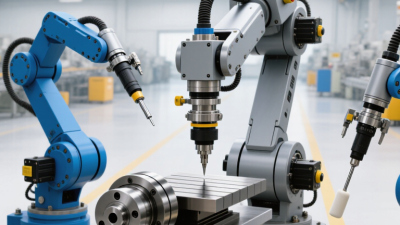
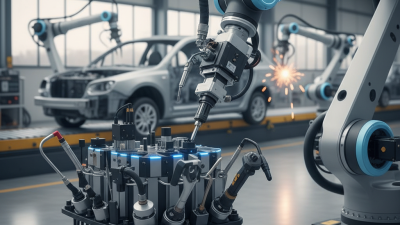
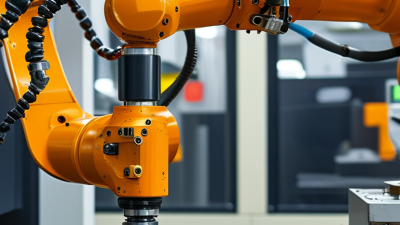
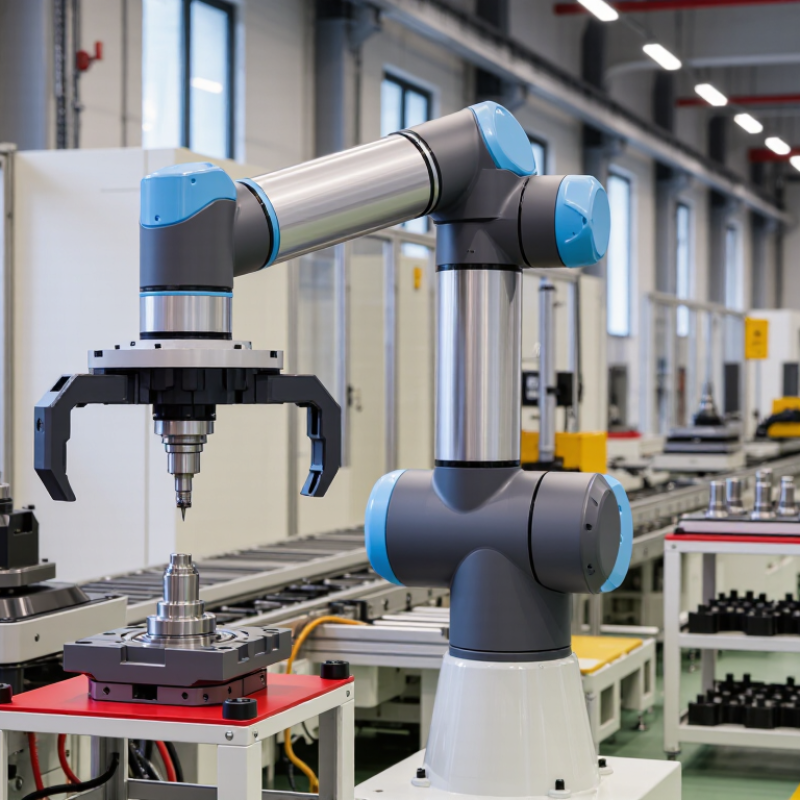
A tool change robot usually means an industrial robot fitted with an automatic tool changer at its wrist. The changer lets one robot use different end effectors, such as a two-finger gripper for parts and a vacuum head for cartons. No hand swap. A fixed-side coupler sits on the robot; matching tool-side couplers attach to each tool. When the robot docks at a storage stand, the two halves align and lock together.
A controller commands the release or lock, while sensors check that the connection is secure. Depending on the setup, the coupler may also connect air, electrical power, or data lines. The robot then selects the programmed tool settings and continues its task. A typical change takes only seconds, but precise docking matters. Even a small alignment error can prevent a proper lock or affect tool position. In practice, the change is rarely as seamless as diagrams suggest: tool weight, cable routing, wear, and accumulated debris can all disrupt repeatability. Engineers should verify the payload and test the full sequence under realistic conditions. It is easy to overlook maintenance. A reliable system needs clear fault handling, too, so the robot stops safely if a sensor cannot confirm the connection.
Which Tool-Changer Types Fit Different Industrial Applications?
Choosing a tool changer starts with the task, not the robot’s payload alone. Manual changers suit low-change cells where operators can safely pause production. Automatic mechanical changers fit frequent tool swaps, such as moving between a gripper and a suction cup. They reduce hands-on changeover, but add weight and another interface to maintain.
Pneumatic changers are practical when tools need compressed air, while electrical versions support sensors or powered end effectors. Hybrid units combine services for complex tools, but bring more connections to inspect. Match the changer’s rated load to the tool, workpiece, and acceleration forces together. A tool may be light on paper, yet create high torque when extended. Small detail. Check utility routing, locking confirmation, cycle frequency, and access for maintenance before specifying the unit.
The International Federation of Robotics’ World Robotics 2024 report recorded about 541,000 industrial robot installations worldwide in 2023, with operational stock reaching roughly 4.28 million. These figures show the scale of automation, not which changer type is best. For a dusty foundry, sealing and rugged connections may matter more than rapid swapping. For electronics assembly, repeatability and clean utility routing may take priority. One caveat: teams sometimes focus on changeover speed and overlook the minutes needed to diagnose a leaking or misconnected service line. Test the complete tool-and-changer setup under real operating conditions.
How Do Payload, Precision, and Cycle Time Affect Selection?
Best Tool Change Robot in 2026 for Industrial Buyers
How Do Payload, Precision, and Cycle Time Affect Selection?
A tool-change robot is only a good fit when its rated capacity matches the real load. Include the gripper, adapters, cables, and workpiece—not just the part weight. A long tool can shift the center of gravity and strain the wrist, even when the total mass looks acceptable. Check the manufacturer’s load chart for the planned reach and orientation. Leave margin. It is easy to overlook side loads during early planning.
Precision means more than repeating the same movement. A robot may return to a position consistently yet still miss the required tool alignment. Check the repeatability specification, then test the actual coupling with your tool plates and fixtures. Look for pin wear, debris, or small shifts after repeated changes. Cycle time also includes approach, locking, confirmation signals, and safe clearance—not only the advertised exchange time. Time the complete sequence in a representative cell.
Tips: Record payload and tool center-of-gravity data before comparing models. Test a cold start and a warm production cycle. If the fastest option causes frequent alignment checks, the real gain may be smaller than expected.
Which Tool Change Robots Stand Out for Industrial Buyers in 2026?
Industrial buyers in 2026 will likely favor tool change robots that solve measurable production problems, not systems with impressive specifications alone. The strongest options combine repeatable positioning, fast coupling, and reliable tool recognition. They should also support different end effectors without forcing major line redesigns.
Maintenance access matters. A technician should reach the locking mechanism quickly, even while wearing protective gloves. Clear status signals can reduce troubleshooting time near a busy cell. Buyers should examine cycle data, payload performance, connector durability, and failure records from similar applications. A robot that changes tools in seconds may still disappoint if its coupler needs frequent cleaning.
Integration quality separates promising systems from dependable ones. Useful solutions communicate with conveyors, sensors, safety controllers, and manufacturing software through common industrial interfaces. They should provide controlled recovery after a missed connection or air-pressure loss. Safety must be validated by qualified professionals for the specific installation. This is not a minor detail.
Real factory trials remain valuable. A demonstration with clean tools may hide dust, vibration, temperature changes, or operator mistakes. Buyers should test the system under ordinary production stress and record maintenance time. No solution is perfect. Some advanced models may offer better flexibility but require more training and tighter calibration. That trade-off deserves honest review before purchase.
What Should Buyers Verify Before Installation and Deployment?
Best Tool Change Robot in 2026 for Industrial Buyers
Before installation, buyers should verify the robot’s real tool-change performance, not only its brochure rating. Request test data for repeatability, cycle time, payload, and tool-lock confirmation. A reliable system should detect incomplete engagement and stop safely. Ask for results using the heaviest tool in the planned set.
Measure the installation area carefully. Record floor strength, robot reach, cabinet clearance, cable routing, air pressure, and electrical capacity. The changer must communicate correctly with the robot controller, production line, and safety system. Check whether tool presence sensors remain stable near coolant, dust, vibration, and temperature changes. Small gaps here can create large downtime later.
Do not overlook maintenance and operator training. Verify spare-part availability, inspection intervals, lubrication needs, and replacement procedures. Request manuals, wiring diagrams, risk assessments, and acceptance-test criteria before delivery. A factory trial should include repeated tool exchanges, emergency stops, power recovery, and realistic production loads. Run it longer than a demonstration.
One detail is easy to miss. Tool weight can shift after hoses, clamps, or sensors are added. Recalculate the actual center of gravity. Installation plans also change under schedule pressure. That is where careful buyers should pause, measure again, and document every assumption. A system may pass the first test and still need refinement after real operators use it.