Why Choose an Automatic Tool Changer?

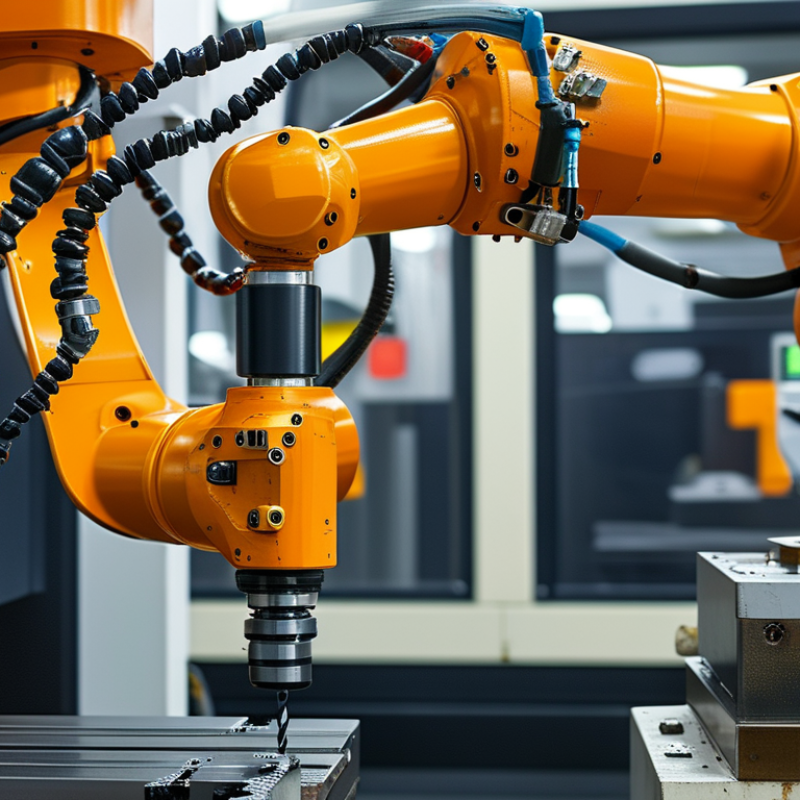
Why choose an automatic tool changer when a manual system appears cheaper? The answer begins with production pressure. According to the International Federation of Robotics’ World Robotics 2024 report, factories installed 541,302 industrial robots worldwide in 2023. More robots require faster, safer, and more repeatable tool changes. A reliable tool changer helps one robot handle drilling, milling, gripping, dispensing, or inspection tasks within the same cell.

The value is visible on the shop floor. A robot finishes a drilling cycle, returns to a defined docking point, and changes tools without an operator entering the work area. This can reduce idle time and support unmanned or lightly staffed shifts. Deloitte’s 2024 Smart Manufacturing and Operations Survey also identifies productivity, quality, and workforce challenges as major manufacturing priorities. Automatic tool changing addresses these priorities through programmed motion, sensor feedback, and consistent coupling force. Small details matter, including clean interfaces, correct payload ratings, and accessible maintenance points.

Still, automation is not magic. The International Federation of Robotics does not measure tool changer adoption separately, so robot-growth data should not be treated as direct market proof. A poorly selected changer may create alignment errors, downtime, or expensive integration work. Engineers should examine cycle frequency, tool weight, air or electrical requirements, safety signals, and spare-part support before purchasing. The best choice depends on the application. Sometimes, a manual changer remains sensible for low-volume production. For demanding cells, however, an automatic tool changer can turn flexibility into measurable operating capacity. The decision deserves testing, not assumptions.
Why Choose an Automatic Tool Changer?

What Is an Automatic Tool Changer?

An automatic tool changer is a mechanical system that replaces cutting tools without requiring the operator to stop the machine. It usually includes a tool magazine, a gripping mechanism, and a programmed exchange sequence. During machining, the spindle releases one tool and receives another from the magazine. The process often takes only a few seconds.

The main reason to choose an automatic tool changer is consistent production. A machine can drill, mill, ream, and finish several features in one setup. This reduces manual handling and helps maintain the position of the workpiece. In my experience, that stability matters most when parts contain repeated holes or tight dimensional requirements. Fewer interruptions can also reduce operator fatigue.

However, an automatic tool changer is not a cure for poor planning. Tool length measurements must be accurate. Holders need regular inspection, and chips can interfere with a secure grip. A rushed setup may create more downtime than manual changes. Small details matter. The machine also needs enough magazine capacity for the planned operations. Reviewing tool paths, checking collision clearances, and testing the first cycle at reduced speed are practical safeguards. I have found that even reliable systems deserve human attention, because an efficient changeover can still repeat the wrong decision.

How Does an Automatic Tool Changer Work?

Why Choose an Automatic Tool Changer?

How Does an Automatic Tool Changer Work?

An automatic tool changer, or ATC, swaps cutting tools without requiring the operator to stop the machining cycle. The process begins when the CNC control reads a programmed tool-change command. The spindle stops at a fixed orientation, and the machine moves to a safe exchange position.

A drawbar then releases the toolholder inside the spindle. A carousel or swing arm brings the selected tool into position. The mechanism removes the used tool and inserts the replacement with controlled movement. Afterward, the drawbar clamps the new holder firmly. Sensors check whether the tool is seated and locked. That pause matters.

The control also links each tool number with its length and diameter offsets. These values guide cutting depth and movement accuracy. Clean air may clear chips from the taper, while coolant residue can still cause trouble. In practical workshops, regular inspection is essential. A worn gripper, loose sensor, or damaged holder can create vibration and poor surface quality. The system is fast, but not careless-proof.

Different machines use different changer layouts, capacities, and exchange speeds. Operators should confirm tool balance, maximum diameter, and maintenance access before choosing one. I would not treat an ATC as a set-and-forget device. Small alignment errors may remain invisible until a precise finishing pass exposes them. Reliable results come from correct programming, clean contact surfaces, and documented checks.

Why Choose an Automatic Tool Changer?

An automatic tool changer (ATC) stores multiple cutting tools and exchanges them without manual intervention. The CNC control stops the spindle, positions the magazine, releases the current tool, loads the selected tool, and clamps it before machining resumes.

How to read the chart: Automatic tool changers expand the number of tools available during a machining cycle. Carousel ATCs commonly hold about 12–30 tools, while chain-style systems can accommodate approximately 30–100 or more. Actual capacity depends on the machine design, tool size, and machining requirements.

What Benefits Does It Provide in Machining?

An automatic tool changer brings practical benefits to everyday machining. It replaces cutting tools without manual intervention, reducing idle time between operations. A machine can drill, mill, chamfer, and finish a part in one cycle. This reduces repeated handling and keeps the workpiece in a stable position.

Accuracy improves when fewer setups are required. Every manual repositioning creates a chance for alignment errors. With a reliable tool changer, the spindle selects the programmed tool and applies its stored offset. This supports consistent dimensions across multiple parts.

It also helps operators focus on inspection, programming, and process control rather than constant tool replacement.

The time savings can be substantial.

In a busy workshop, even a few seconds per tool change can affect daily output. Automatic changing also supports unattended machining when the program, tooling, and safety checks are properly prepared.

However, it is not a substitute for good process discipline. Worn holders, incorrect offsets, or poor calibration can still damage accuracy. I have seen automated cycles become slower when tool data was not maintained carefully. That weakness deserves attention.

A well-managed system should track tool life, verify seating, and allow quick recovery after a fault. Its value comes from dependable integration, not automation alone.

Which Machines and Applications Use It?

Automatic tool changers are most valuable on machines that perform several operations in one cycle. CNC machining centers use them for milling, drilling, tapping, reaming, and countersinking. A programmed carousel can select the next tool while the operator stays outside the enclosure. This reduces manual handling and helps maintain repeatable setups.

The same principle suits horizontal machining centers, five-axis machines, and turning centers with driven tooling. These systems support complex parts with angled holes, curved surfaces, and tight tolerances. Automotive plants often use automatic tool changers for engine and transmission components. Aerospace workshops apply them to aluminum structures and difficult alloys. Medical manufacturing also benefits when one machine handles small, varied batches. It is not always the best answer, though. A low-volume shop with two tools may gain little from a large changer.

Robotic cells use related automatic changers for grippers, drills, deburring tools, and inspection devices. The International Federation of Robotics reported 541,302 industrial robots installed worldwide in 2023. That scale shows why flexible end-of-arm tooling matters. In addition, the U.S. Department of Energy identifies reduced idle time and improved process consistency as important efficiency opportunities in manufacturing. An automatic tool changer can support both goals, especially when machines run unattended for long periods. Yet maintenance remains easy to underestimate. Chips, coolant, and worn locking mechanisms can cause failed changes. A practical design needs tool-life monitoring, clean interfaces, and a recovery plan when the perfect cycle breaks.

What Factors Should Guide Your Selection?

Why Choose an Automatic Tool Changer?

What Factors Should Guide Your Selection?

Selecting an automatic tool changer should begin with the machine, not the brochure. Check spindle interface, toolholder size, payload, reach, and available magazine space. A mismatch can create vibration, poor repeatability, or expensive redesign work. In real workshops, chip buildup around the taper is easy to underestimate. It can turn a five-second change into a stubborn interruption.

Cycle time deserves careful measurement. Record the current manual change, operator walking distance, tool-search time, and restart delay. Then compare these figures with the changer’s rated speed. Faster is not always better. A high-speed unit may require cleaner air, tighter maintenance, and more precise control integration.

The International Federation of Robotics reported 541,302 industrial robots installed worldwide in 2023, showing how strongly factories are pursuing automation. Yet automation only pays when surrounding processes are ready.

Reliability should guide the final choice. Examine change-test data, sensor feedback, locking verification, spare-part access, and service procedures.

The Deloitte 2024 Smart Manufacturing and Operations Survey found that 92% of manufacturers viewed smart manufacturing as a competitiveness driver within three years. That ambition can expose weak foundations.

Ask whether the changer communicates clearly with the CNC system and whether operators can diagnose faults without guesswork. Calculate payback using actual production hours, not optimistic estimates.

We often overlook training costs. That is a mistake. A practical selection may sacrifice peak speed for stable operation, easier cleaning, and predictable recovery after a failed change.

Login