2026 Best Robotic Tools for Efficient Automation in Various Industries?
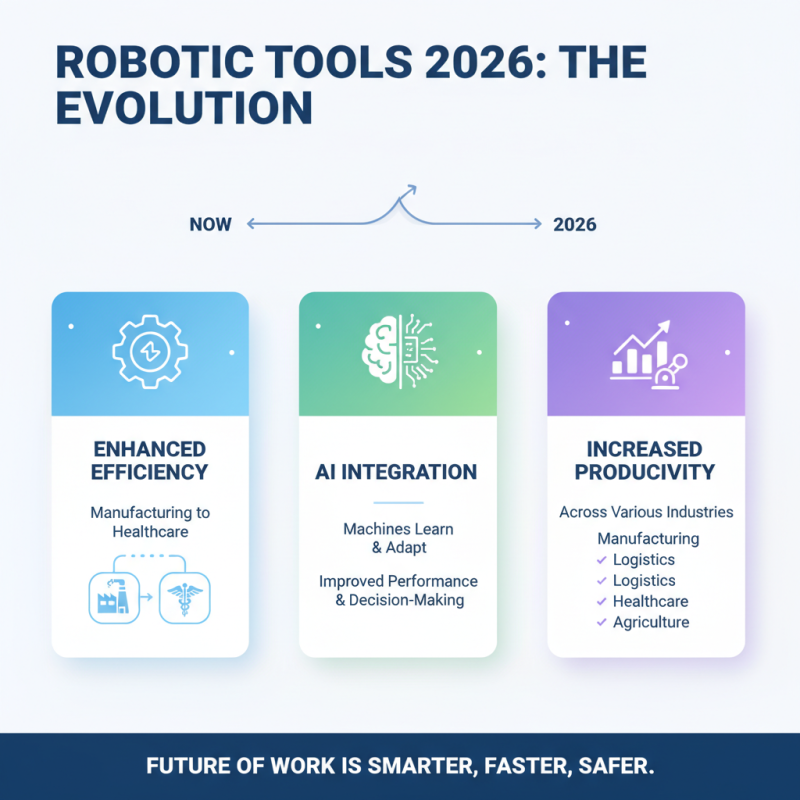
The landscape of automation is rapidly evolving. In 2026, robotic tools will be central to enhancing efficiency across various industries. According to a recent McKinsey report, automation could boost productivity by 1.4 to 2.0 times. This potential is transforming sectors like manufacturing, healthcare, and logistics.
Industries are investing heavily in robotic tools. The global robotics market is projected to reach $500 billion by 2030. With advancements in AI and machine learning, robotic tools can now perform complex tasks. Yet, there are challenges. Companies must navigate high costs and the need for skilled labor.
Moreover, not all robotic tools deliver the expected ROI. Many organizations face difficulties in implementation. This reality prompts a reevaluation of strategies. As industries embrace automation, finding the right balance will be crucial for sustainable growth.
Overview of Robotic Tools and Their Impact on Automation
Robotic tools are transforming industries through efficient automation. These tools streamline repetitive tasks, allowing workers to focus on complex activities. According to a recent report, 80% of companies implementing robotic automation witnessed a 30% increase in productivity. The manufacturing sector, for instance, has seen significant advancements with robotic arms handling assembly lines and quality inspections.
These technologies are paving the way for faster production cycles and reduced human error.
In logistics, automated guided vehicles (AGVs) are optimizing warehouse operations. Data indicates that logistics firms using AGVs can cut labor costs by up to 50%. However, reliance on robotic systems raises concerns about job displacement. While automation increases efficiency, it also calls for reskilling the workforce to adapt to new roles.
Industries must balance the benefits of automation with the socio-economic impacts on employment. Achieving this equilibrium is crucial for sustainable growth.
Key Industries Adopting Robotic Tools for Enhanced Efficiency
As industries increasingly adopt robotic tools, efficiency rises significantly. According to a recent report by McKinsey, automation can improve productivity by up to 30% in manufacturing sectors alone. Robotic tools streamline operations, reduce human error, and allow for 24/7 operation. This transformation is evident in sectors like automotive, where robots assemble vehicles with precision.
In healthcare, robotic surgery tools enhance operational efficiency and patient recovery times. A study published in the Journal of Robotics indicates that hospitals using robotic-assisted surgery saw a 20% decrease in recovery duration. Manufacturing and healthcare are just two areas benefiting from this shift. However, challenges persist. High initial costs and a learning curve can deter smaller companies from adopting these technologies.
Tips: Invest in training programs for staff to ensure smooth adoption. This will mitigate potential issues. Monitor the performance of robotic tools closely. Continuous assessment is necessary to enhance their effectiveness.
Retail is another industry experiencing change. Automated inventory management and customer service robots are gaining traction. According to a report by Gartner, 50% of retail operations will implement some form of robotics by 2026. However, businesses must address customer concerns about automation impacting jobs. Balancing efficiency and employee welfare is crucial for sustainable growth.
2026 Best Robotic Tools for Efficient Automation in Various Industries
| Industry |
Robotic Tool Type |
Efficiency Improvement (%) |
Primary Function |
| Manufacturing |
Collaborative Robots (Cobots) |
30% |
Assembly and Quality Control |
| Healthcare |
Surgical Robots |
25% |
Minimally Invasive Surgery |
| Agriculture |
Autonomous Harvesters |
40% |
Crop Harvesting |
| Logistics |
Automated Guided Vehicles (AGVs) |
35% |
Material Transport |
| Construction |
Drones |
20% |
Site Surveying |
| Retail |
Robotic Checkout Solutions |
15% |
Customer Checkout |
Comparative Analysis of Leading Robotic Tools in 2026
In 2026, the landscape of robotic tools has evolved significantly across various industries. Manufacturing saw the rise of collaborative robots, or cobots. These tools work alongside humans, enhancing productivity. However, their integration is not without challenges. Companies often report difficulties in programming and deployment, which can lead to inefficiencies.
In the healthcare sector, robotic surgical systems have gained traction. They offer precision and reduced recovery times. Still, not all facilities can afford such advanced tools. The cost remains a barrier for many. Additionally, training medical staff is crucial for effectively utilizing these robots. Experience shows that even slight operational errors can lead to negative outcomes.
Logistics has embraced robotics for inventory management and delivery. Automated guided vehicles (AGVs) navigate warehouses seamlessly. Yet, they face limitations in navigating complex environments. Some facilities struggle with frequent upgrades and technological compatibility. A thoughtful approach is necessary to address these issues and optimize automation further.
Future Trends and Challenges in Robotic Automation Solutions
As industries shift towards automation, the landscape of robotic solutions is evolving rapidly. New technologies are emerging. They promise increased efficiency and precision in operations. However, this leap forward comes with its own set of challenges. Many firms struggle with integrating robots smoothly into existing workflows. This often leads to underutilized equipment.
Workers may feel uneasy about job displacement. Although automation can enhance productivity, it raises concerns about employment. Companies must address these fears. They need to ensure that their workforce adapts to new roles alongside technology. Training programs can help bridge this gap. Understanding robotics is essential, but so is addressing the human aspect.
Another challenge is the reliability of robotic solutions. Not all systems work flawlessly on the first try. Some may require constant adjustments and maintenance. This unpredictability can hinder performance. Businesses must consider these aspects before investing heavily in robotic tools. Future trends indicate a blend of human and machine capabilities. Finding this balance is essential for success in automation.