Top 10 Benefits of Using an Automatic Tool Changer for Your CNC Machine?
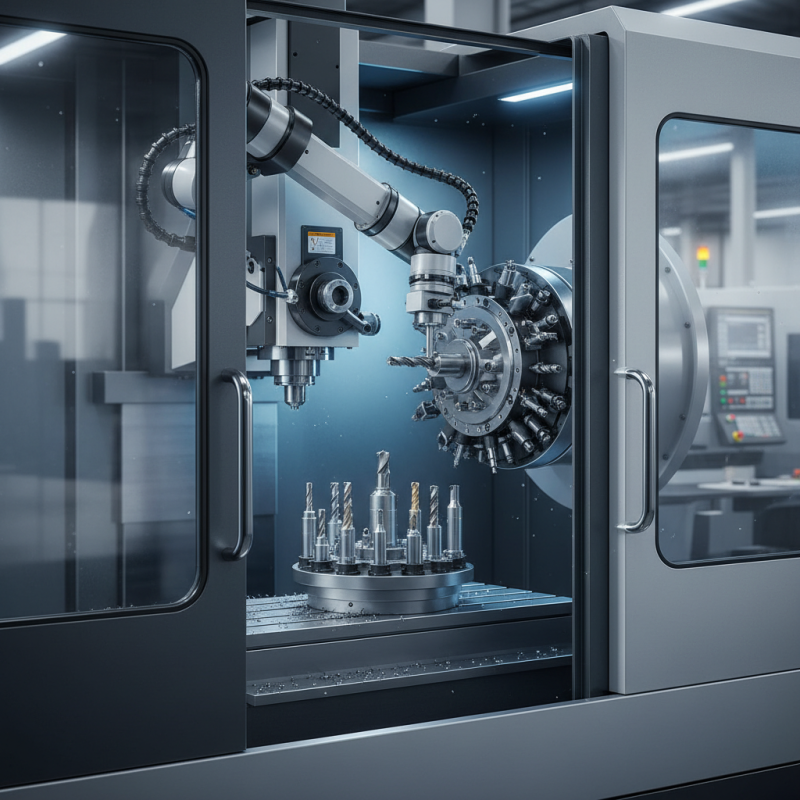
The automation of machining processes has transformed industries. One significant enhancement in CNC technology is the automatic tool changer. This device allows machines to swap tools quickly, improving efficiency and precision. Imagine a CNC machine seamlessly switching from a drill to a mill in a matter of seconds. The automatic tool changer reduces downtime, making the production process smoother.
However, integrating an automatic tool changer isn’t without challenges. Initial setup can be complex and might require additional training for operators. Maintenance is also crucial, as a malfunction may lead to costly delays. Despite these hurdles, the advantages are substantial. Increased production speed and reduced human error can lead to higher profitability. Many companies see a return on investment in just a few months.
Ultimately, the decision to use an automatic tool changer should consider both benefits and hurdles. It’s not a one-size-fits-all solution. Each business should evaluate its specific needs. Understanding these aspects can lead to better outcomes in CNC operations.
Benefits of Reduced Setup Time with Automatic Tool Changers in CNC Machines
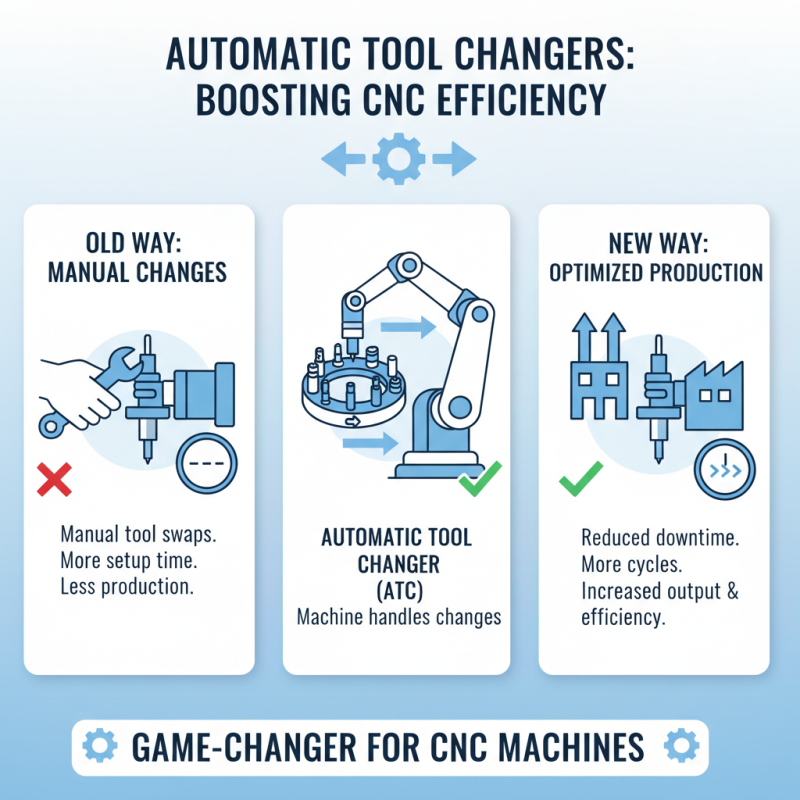
Automatic tool changers (ATCs) are game-changers for CNC machines. They significantly cut down setup time. Instead of manually changing tools, the machine handles it automatically. This process minimizes downtime, allowing for more production cycles. Manufacturers can increase output and efficiency easily.
Tips: Always keep your tools organized. Label each tool clearly. This helps the ATC function smoothly. Regular maintenance can prevent unexpected delays. Check for wear and tear on tools frequently. This practice saves time and prevents errors.
With ATCs, there's less human error. Mistakes from manual handling are reduced. However, the initial investment can be high. The learning curve takes time. Operators need training to maximize the ATC's benefits. Balancing these factors is crucial when integrating ATCs.
Tips: Encourage your team to share feedback. It helps identify issues early. Document any problems during operation. Continuous improvement should be a goal. Understand that challenges might arise, but addressing them can lead to better performance.
Enhancing Production Efficiency: Data on Time Savings from Tool Changes
In the fast-paced world of CNC machining, efficiency is crucial.
Automatic tool changers (ATCs) have revolutionized production lines. They allow for rapid tool changes, significantly reducing downtime. Data shows that companies using ATCs can cut tool change times by up to 75%. This reduction translates into increased machine utilization.
Moreover, a study from a leading industrial engineering publication found that incorporating an ATC can increase overall production efficiency by over 30%. When machines spend less time switching tools, they can operate longer on actual production tasks. Less idle time means more complete projects in shorter periods. However, not all ATC systems yield these gains.
Some setups may require constant maintenance, leading to unexpected downtimes.
The implementation of an ATC can be a game-changer, but it must be part of a well-planned strategy. Ensuring operator training and proper maintenance is vital. Unmanaged setups can negate time savings and affect product quality. The transition to an ATC is not always smooth, but it can offer remarkable benefits if executed properly.
Minimizing Human Error: Statistical Insights into CNC Tool Management
Minimizing human error is crucial in CNC tool management. A recent industry report highlights that human error accounts for nearly 30% of all CNC machine downtime. This statistic emphasizes the necessity for automation. An automatic tool changer significantly reduces reliance on manual intervention. Operators can miss important steps, leading to costly mistakes.
Moreover, a survey revealed that companies using automatic tool changers reported a 25% increase in production efficiency. These tools optimize the switching process, allowing for quicker transitions between tasks. This efficiency leads to less wasted time and resources. However, machine setup still requires attention. Operators should remain vigilant during initial configurations to prevent errors.
Despite the advancements, no system is foolproof. Some workers express concern over the loss of hands-on skills. Continuous training programs are necessary to bridge this gap. Emphasizing a balance between automation and operator skill will yield the best results. By analyzing data and monitoring outcomes, companies can fine-tune their processes, ensuring minimal error while enhancing productivity.
Top 10 Benefits of Using an Automatic Tool Changer for Your CNC Machine
| Benefit |
Description |
Statistical Impact (%) |
| Minimized Human Error |
Reduces mistakes in tool changes, leading to higher precision. |
25% |
| Increased Efficiency |
Speeds up production by automating tool changes. |
30% |
| Reduction in Cycle Time |
Shortens time taken for tool switching, improving overall throughput. |
20% |
| Consistent Quality |
Ensures uniform tool handling, maintaining product quality. |
40% |
| Lower Labor Costs |
Reduces the need for manual tool management, cutting personnel costs. |
15% |
| Improved Tool Management |
Enhances tracking and inventory of tools used. |
35% |
| Flexibility in Operations |
Easily switch tools for varied tasks, enhancing versatility. |
10% |
| Reduced Downtime |
Less time spent on manual tool changes means more uptime. |
50% |
| Enhanced Safety |
Minimizes operator exposure to handling sharp tools. |
20% |
| Traceability |
Easily track tool usage history and performance metrics. |
25% |
Cost-Effectiveness: ROI Analysis of Automatic Tool Changers in Manufacturing
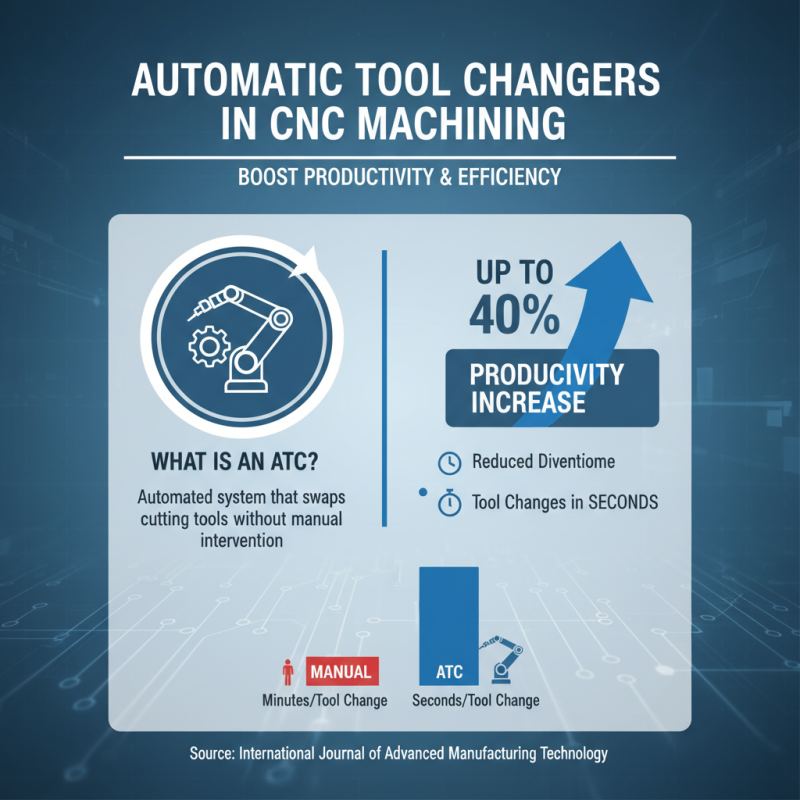
The implementation of automatic tool changers (ATC) in CNC machining has become increasingly prevalent. According to a recent report from the International Journal of Advanced Manufacturing Technology, machines equipped with ATCs can boost productivity by up to 40%. This efficiency is primarily due to reduced downtime when switching tools. A machine may take several minutes to change tools manually, but an ATC can accomplish this in seconds.
Cost-effectiveness is a major consideration for manufacturers. Research from the Association for Manufacturing Technology indicates that ATCs can lead to a return on investment (ROI) of over 200% within the first year of operation. This data shows that while initial costs may be high, the long-term savings in labor and time are substantial. Each tool change costs money, and reducing this cost can significantly impact profit margins.
However, challenges remain. Implementing an ATC requires a skilled workforce capable of setup and maintenance. Mismanagement can lead to errors, resulting in costly mistakes on the production floor. Not every shop may benefit equally. Understanding the specific needs of a manufacturing operation is crucial. An automatic tool changer won’t solve every problem, but its advantages can be transformative when applied appropriately.
Increased Versatility: How Automatic Tool Changers Adapt to Diverse Projects
Automatic tool changers (ATCs) revolutionize CNC machining. They provide incredible versatility for diverse projects. Data shows that manufacturers using ATCs can decrease setup times by up to 50%. This efficiency allows for more complex tasks and shorter turnaround times, making businesses more competitive.
ATCs can accommodate various tools, from drills to mills. They adapt easily to the project at hand. A study by the National Tooling and Machining Association found that using an ATC can increase production capacity by 30%. This is significant for diverse industries, including aerospace and automotive. However, some setups may require adjustments, proving that not every project is straightforward.
Tips: Always assess your project needs before selecting tools. Consider how often you'll change tools. Too frequent changes can reduce efficiency. Maintaining a balanced tool inventory is essential. Avoid excess, as it can lead to unnecessary costs. Embrace the versatility of ATCs, but be prepared to refine your approach as projects evolve. Balancing flexibility with focus is key.
Top 10 Benefits of Using an Automatic Tool Changer for Your CNC Machine