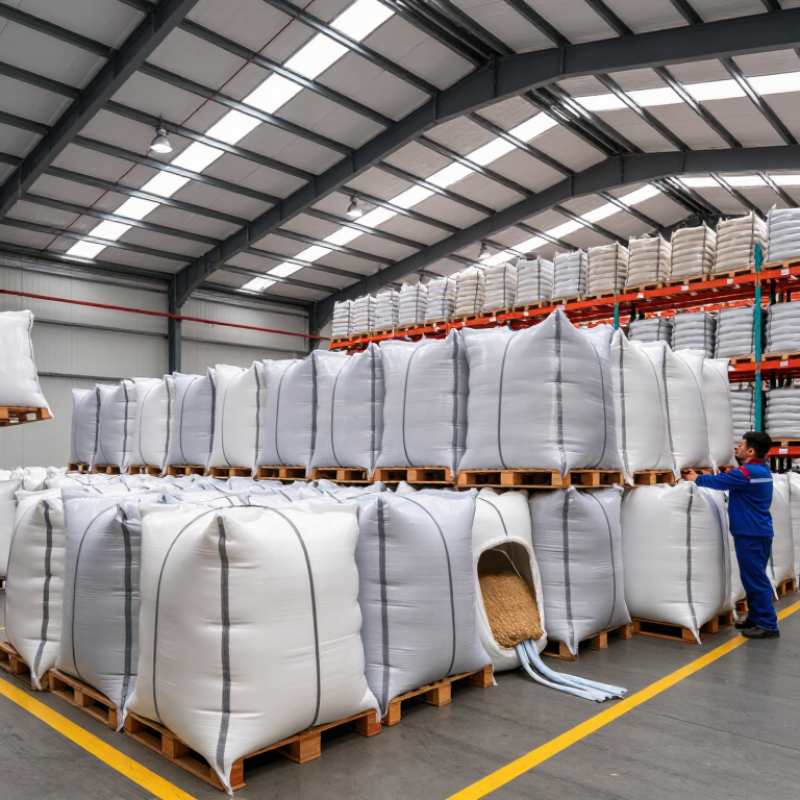
| 1. Start with the regulatory classification | Confirm the chemical’s UN number, proper shipping name, hazard class, packing group, filling ratio, and transport mode before selecting the bag. | 13H3 or 13H4 may be suitable only when permitted by the applicable dangerous-goods packaging instruction. | Flexible intermediate bulk container made from woven plastics, generally polypropylene, with or without an inner liner. | Request the supplier’s UN design-type test certificate and confirm that its rating covers the intended contents and packaging group. |
| 2. Match the liner and coating to chemical compatibility | Use a liner when the product needs improved containment, reduced dusting, or protection from moisture and contamination. Select liner material through compatibility testing. | 13H3: woven plastics, uncoated, with liner.
13H4: woven plastics, coated, with liner. | 13H3 uses an uncoated woven-plastic outer body plus a liner; 13H4 adds a coating to the woven-plastic body plus a liner. | Check chemical permeation, swelling, brittleness, extractables, temperature range, liner seams, and fit around the filling and discharge spouts. |
| 3. Choose the correct electrostatic-control design | For flammable powders, vapors, or combustible-dust environments, specify the required FIBC electrostatic type and grounding procedure. | 13H3 and 13H4 identify construction and liner status; they do not by themselves identify the electrostatic FIBC type. | The bag may require conductive, dissipative, or static-protective features depending on the risk assessment and applicable standard. | Define grounding points, resistance limits, safe filling and discharge procedures, and whether the installation requires a Type C or Type D arrangement. |
| 4. Size the bag for safe handling and filling | Select a volume and safe working load that support stable stacking, forklift handling, and the actual bulk density of the chemical. | The UN code does not replace the bag’s marked safe working load, test rating, or handling instructions. | Common design options include four lifting loops, corner loops, filling spouts, discharge spouts, and baffle panels. | Verify safe working load, safety factor, test load, dimensions, lifting method, bulk density, maximum fill level, and stacking conditions. |
| 5. Specify dust-tight closures and suitable spouts | Use a controlled filling inlet, secure closure, and discharge outlet that limit dust release and prevent accidental opening during transport. | 13H3 and 13H4 can be configured with different closure and spout designs, subject to the approved design type. | Possible features include a top inlet with flap or drawstring closure, bottom discharge spout, liner tie, and secondary closure. | Check dust leakage, closure security, discharge control, liner attachment, compatibility with the filling equipment, and operator protection measures. |
| 6. Use ISO 21898 as the performance reference | Use a recognized specification for design, testing, marking, handling, and quality control rather than selecting a bag only by appearance or price. | ISO 21898 is a performance and specification standard for FIBCs; it is not a replacement for the UN packaging approval requirements. | The specification can cover body fabric, seams, lifting features, filling and discharge systems, liners, testing, and marking. | Ask for documented test procedures and results for lifting, topple, tear, drop, compression or stacking, seam strength, and material identification where applicable. |
| 7. Build traceability into wholesale purchasing | Use consistent specifications and batch records so every shipment can be linked to the approved design and inspection results. | The completed UN marking must correspond to the approved packaging design; do not alter construction without approval review. | Each production batch should be identifiable by specification, manufacturing date or lot, capacity, safe working load, and required handling information. | Inspect fabric, seams, loops, spouts, liners, dimensions, markings, cleanliness, and packaging condition; retain certificates and inspection records. |